
If you are applying to study, work, relocate, or settle in another country, you may be asked to provide a certified translation of your documents. If your documents are in English and the country in which they will be used wants them in French, German, Portuguese, or Spanish, you will be asked for a certified translation.
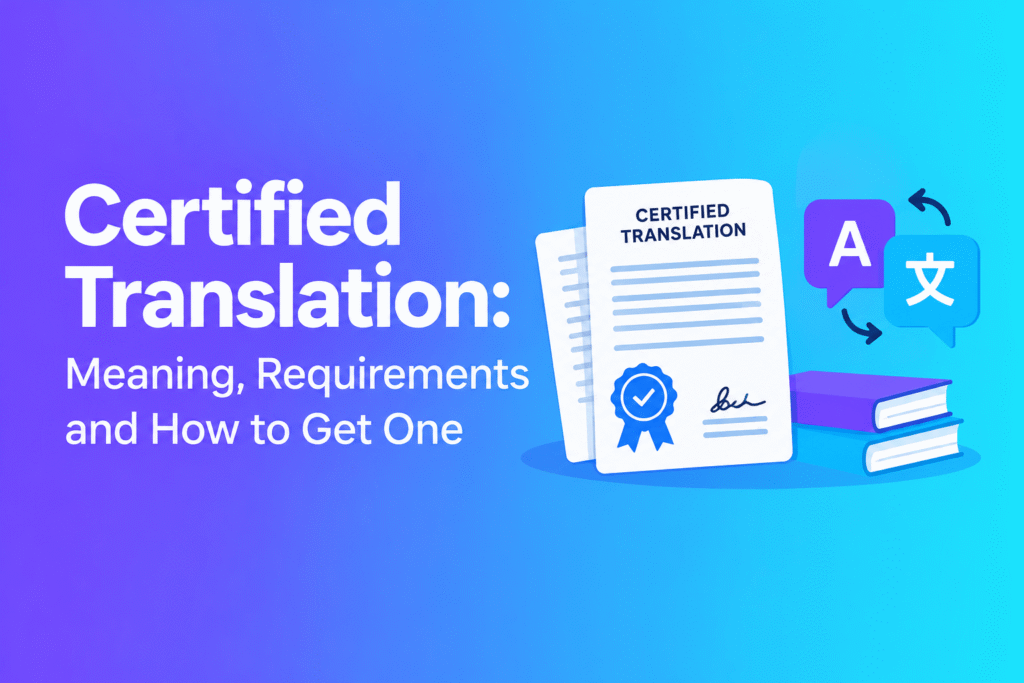
A certified translation is an official translation of your document done by a qualified professional translator or a translation agency. The translator signs a statement confirming the translation is complete and accurate. It is a common step, but the wrong type of translation can be rejected. That can cost you time and money.
This guide will teach you what a certified translation is, which documents you can translate, what it costs and how long it takes in Nigeria, how to get a translation the receiving organisation will accept, and how it differs from a notarised one.
Key Takeaways
- A certified translation is a translated document with a signed statement confirming that the translation is complete, accurate, and faithful to the original.
- You may need a certified translation for birth certificates, marriage certificates, academic records, police clearance certificates, bank statements, affidavits, and business documents used for immigration, study, employment, legal, or official purposes.
- The cost and processing time depend on the document’s length, language pair, complexity, urgency, and the certification requirements of the receiving embassy, university, employer, or immigration authority.
- Before ordering a translation, confirm whether the receiving organisation requires a certified translation, sworn translation, or notarisation, as acceptance rules differ by country and institution.
What Is a Certified Translation?
A certified translation is a translation of your document into the language needed by the country where you will use it, along with a signed statement from the translator or agency confirming that it is complete and accurate. The embassy or immigration office in that country may ask for it because they want proof that the translation can be trusted.
However, a certified translation does not mean the translator holds a formal government licence. Some countries, like Germany, for example, require that the translation be done by a Sworn translator in Germany. (Source: Germany Federal Foreign Office).
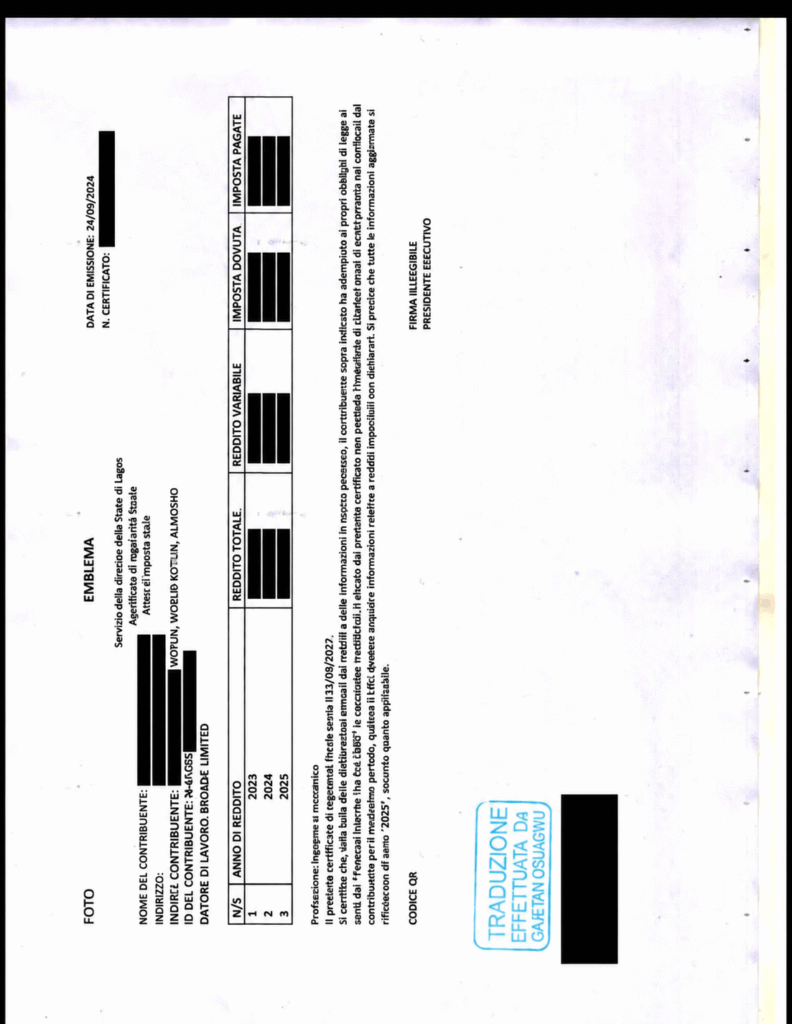
What Should a Certified Translation Contain?
A certified translation must include the following components:
- The complete translated text: It should translate every part of the original document, including stamps, seals, signatures, watermarks, and marginal notes.
- A copy of the original document: A clear copy of your original English document should be attached behind the translated page for comparison.
- The certificate of Accuracy: A formal statement should be attached to the document containing:
- A statement confirming the translator’s qualifications.
- A statement that the translation is accurate and complete to the best of their knowledge.
- The translator’s full name, signature, and date.
- Contact details of the translator or translation company.
When Do You Need a Certified Translation?
If you’re moving or traveling abroad, you’ll need a certified translation when the embassy, school, or other official body asks for your documents in another language.
But I want you to know that not every document needs to be translated. Translation depends on the country, the language of your document, and the requirements of the organisation receiving it. For example, if you are going to an English-speaking country like the UK, you do not need to translate your Nigerian documents because they are already in English.
Common situations where you will need translation of documents include the following:
- Immigration and visa applications: You may need a certified translation when applying for a visa, residence permit, permanent residency, or citizenship in another country. These can include birth certificates, marriage certificates, police clearance certificates, divorce certificates, and other supporting documents.
- International study applications: If you want to study at a university abroad, you may be asked to submit translated academic records, certificates, transcripts, or other supporting documents. Documents that may require translation include academic transcripts, degree certificates, diplomas, and other educational records.
- Overseas employment: Employers or professional registration bodies may request translated educational certificates, professional licences, employment records, or other documents.
- Marriage and family-related applications: You may need certified translations of birth certificates, marriage certificates, divorce documents, or other civil records when registering a marriage abroad or applying for family reunification.
- Legal proceedings: Courts, lawyers, and other legal offices may require translated versions of contracts, affidavits, judgments, and other documents.
- Business and official transactions: Companies that do business across borders may need translations of incorporation documents, contracts, financial records, and other official paperwork.
How to Get a Certified Translation: Step-by-Step Guide
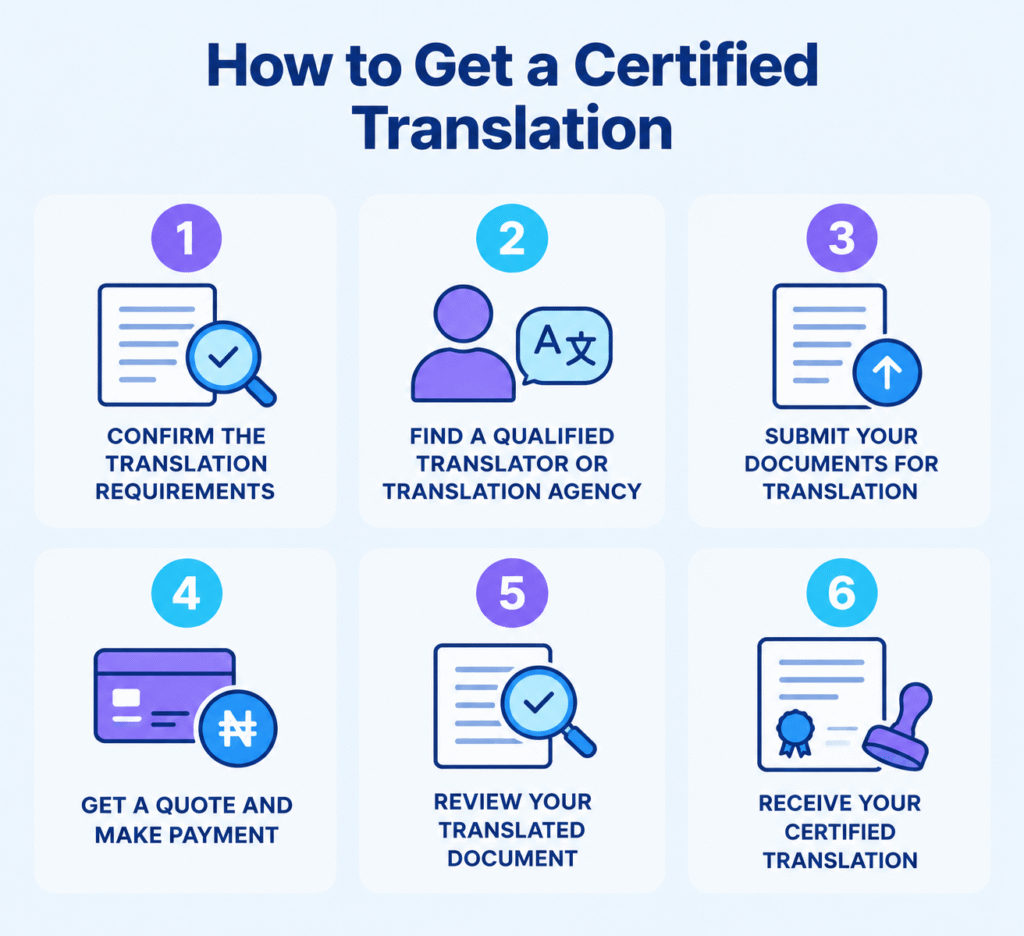
Here is a step-by-step breakdown of how you can get a certified translation in Nigeria
Step 1: Confirm the translation requirements
Start by checking the instructions from the embassy, immigration authority, university, employer, or organisation receiving your document.
Step 2: Find a qualified translator or translation agency
Look for a translator or translation agency with experience handling the type of document you need.
Step 3: Submit your documents for translation
Send a clear, readable copy of your document through the translator or translation agency’s approved submission method.
Step 4: Get a quote and make payment
Ask for a written quote before proceeding. It should state the total cost and expected delivery date. Certification included, and any extra charges.
Step 5: Review your translated document
When you receive a draft or completed translation, check important details such as your full name, dates of birth, document numbers, addresses, and institution names, and be sure they are correct.
Step 6: Receive your certified translation
The translator or agency will provide the completed translation with the required certification statement, signature, and any additional details agreed upon.
Get your document Translated
Get your document translated in less than 48 hours.
Certified TranslationHow Much Does Certified Translation Cost in Nigeria?
The cost of a certified translation in Nigeria varies from one translator to another. Prices usually depend on the language you need, the number of words or pages, and how urgently you need the work done. A trusted agency can translate your documents for you for 50,000 naira plus 5,000 naira VAT.
How Long Does Certified Translation Take?
The time required for certified translation depends on the length of your document, the language involved, and the translator’s workload. A short document, such as a birth certificate or marriage certificate, is often ready in 1 to 3 working days.
Longer documents, like academic transcripts or medical records, can take 3 to 7 working days. If you are running out of time, many translators offer a faster service for an extra fee.
Online Certified Translation Services
You do not always need to visit a translation office to get your documents translated. Most translators and translating agencies accept documents online, so you can get certified translation services online by simply submitting your original documents online, making payments, and arranging electronic or physical delivery for your translated documents.
What Is the Difference Between Certified Translation and Notarized Translation?
Certified translation and notarized translation are related, but they are not the same thing.
A certified translation proves that the translation is accurate, while a notarized translation adds an official who witnesses the translator signing the statement and confirms their identity.
You should know that not every country requires you to notarize a translated document; always check the requirements of your destination country first.
|
Feature |
Certified translation |
Notarized translation |
|
Main purpose |
Confirms the translation’s completeness and accuracy |
Provides notarial verification of a signature, oath, or declaration |
|
Who is involved? |
A competent translator or translation agency |
A translator and a notary public. |
|
What is provided? |
The translation and a signed certification statement |
The translation and a notary-relevant notarized declaration or document |
|
Does it guarantee acceptance abroad? |
No, acceptance depends on the receiving authority |
No, acceptance depends on the receiving authority |
|
Typical use |
Immigration, education, employment, and official applications. |
Applications that specifically require notarization or a sworn declaration |
Note
A notarized translation does not automatically mean the translation is accurate. The notary public verifies the translator's signature or witnesses a sworn declaration, rather than checking the translation itself.
How to Choose a Reliable Certified Translation Service
To avoid document rejection or visa delays, choose a translatior/ translation agency that meets these requirements. Use this list when comparing the best online certified translation services or certified translators in Nigeria:
- Embassy & University Acceptance: Look for a service with a proven track record of translations accepted by foreign embassies in Nigeria and international bodies.
- Accuracy Guarantee: Ensure they offer draft reviews so you can verify the spelling of names, passport numbers, and official dates before final stamps are applied.
- Strict Confidentiality: Reliable agencies use secure communication channels and non-disclosure protocols to protect your sensitive personal data.
- Clear Communication: Choose providers that offer clear timelines and communicate every detail clearly.
- Clear Upfront Pricing: A reliable provider will give you a transparent, comprehensive price with no hidden fees after completion.
Frequently Asked Questions
No. A certified translation comes with a signed statement confirming that the translation is complete and accurate, while a sworn translation is done by a translator who has been officially appointed or sworn under that country’s legal system.
If the document is not in English, you will need a certified translation. The U.S. Citizenship and Immigration Services (USCIS) requires any foreign-language document submitted with an application to be accompanied by a complete English translation.
You should not assume that you can translate and certify your own documents. Many immigration authorities do not accept self-translations, and some prohibit you from translating your own documents.
Conclusion
Certified translation is an important part of preparing documents for international use. Whether you are applying for a visa, studying abroad, seeking employment, or handling family-related immigration matters, understanding the requirements can help you avoid unnecessary delays and expenses.
If you need professional help, you can visit a translation agency for a faster, smoother, and stress-free experience.
Get your document Translated
Get your document translated in less than 48 hours.
Certified Translation